← Back to Case Studies

CASE STUDY · SILLA

4.5x more orders. Same team. Owner on another continent.

Silla used paper and Excel to manage furniture sales, then retyped order details into the courier's system. I built an app in about a month. Now the whole company runs through it, from buying stock to customer reviews. Today the team handles about 90 orders a day instead of 20, with the same number of people.

  • Online furniture retailer, Serbia
  • WooCommerce + the courier's API
  • Built in about a month
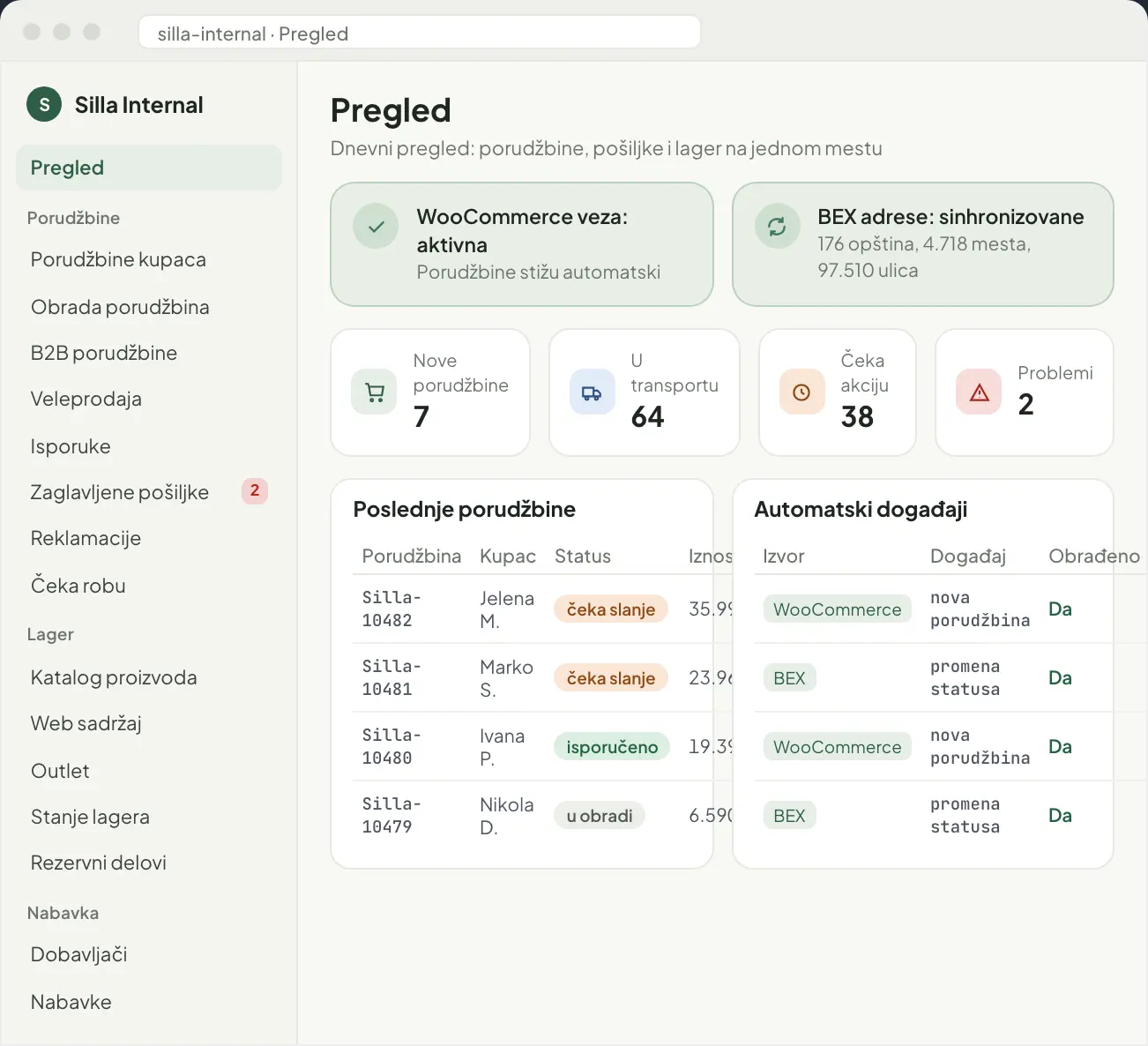
Mock-up of the Silla app dashboard
Mock-up of the Silla app dashboard.
20 → 90
orders a day with the same number of staff
0
packing errors, down from 3–8 a week
1,000+
Google reviews, up from fewer than 100
3–4
extra hires avoided, about €31,000 to €41,000 saved a year

“I work from Thailand and visit trade fairs around the world, and I see the whole business in one click. The company is growing faster than ever, and I have time for other projects.”

Veljko Šujić, owner, Silla

THE SAME ORDER, BEFORE AND AFTER

From paper, Excel and retyping to one click

Before the app, each order passed through three or four people and just as many tools. Every time someone copied the details, there was another chance for an error.

Before: a chain of manual work

  1. An order arrives on the website

    Someone has to notice it and print it out.

  2. The details go onto paper

    Customer, address, model, color and quantity.

  3. Someone copies them into Excel

    Stock records are updated by hand and fall behind.

  4. Someone types them into the courier's system

    The address is copied for the third time.

  5. The paper goes to the warehouse

    A warehouse worker uses it to find the model and color.

  6. Someone searches across apps for the status

    A customer calls, and finding the answer can take up to 15 minutes.

3–8 errors a week: wrong address, wrong chair, wrong stock count.

After: one system

  1. The order arrives automatically

    WooCommerce sends it to the app as soon as the purchase is made.

  2. One click: courier and warehouse

    The app creates a shipment with the courier and a packing task. It checks the address against a database of 97,510 streets.

  3. Scan instead of checking by eye

    The packing task stays open until the correct model, color and quantity have been scanned.

  4. Tracking and updates

    The customer receives a shipment number, a receipt and an invitation to review the purchase.

  5. Stock updates itself

    Stock is tracked by component, with reservations for open orders.

  6. The status is there immediately

    One screen. No searching.

Packing errors have practically disappeared. The system blocks them before a package leaves.

Orders a day, same team

An average day before and after the app.

Before the app
About 20
Today
About 90

4.5x the volume, with no new hires.

Google reviews

Total reviews on the company's Google profile.

Before the app
Fewer than 100
Today
1,000+

10x as many reviews. The invitation goes out automatically, straight after delivery.

WHAT THE APP DOES

The whole company in one system

Sales, warehouse, delivery, complaints, outlet, purchasing and reports. These screens show how the Silla team uses the app every day.

WAREHOUSE

The wrong chair can't get packed

The warehouse has its own screen on a phone. It shows only today's tasks: packing, wholesale, incoming goods, returns and spare parts, each with a count of waiting tasks.

Barcode scanning is required. The app rejects the wrong model or color and leaves the task open.

The team can see who packed each order and when.

Labels for the courier print from the same app.
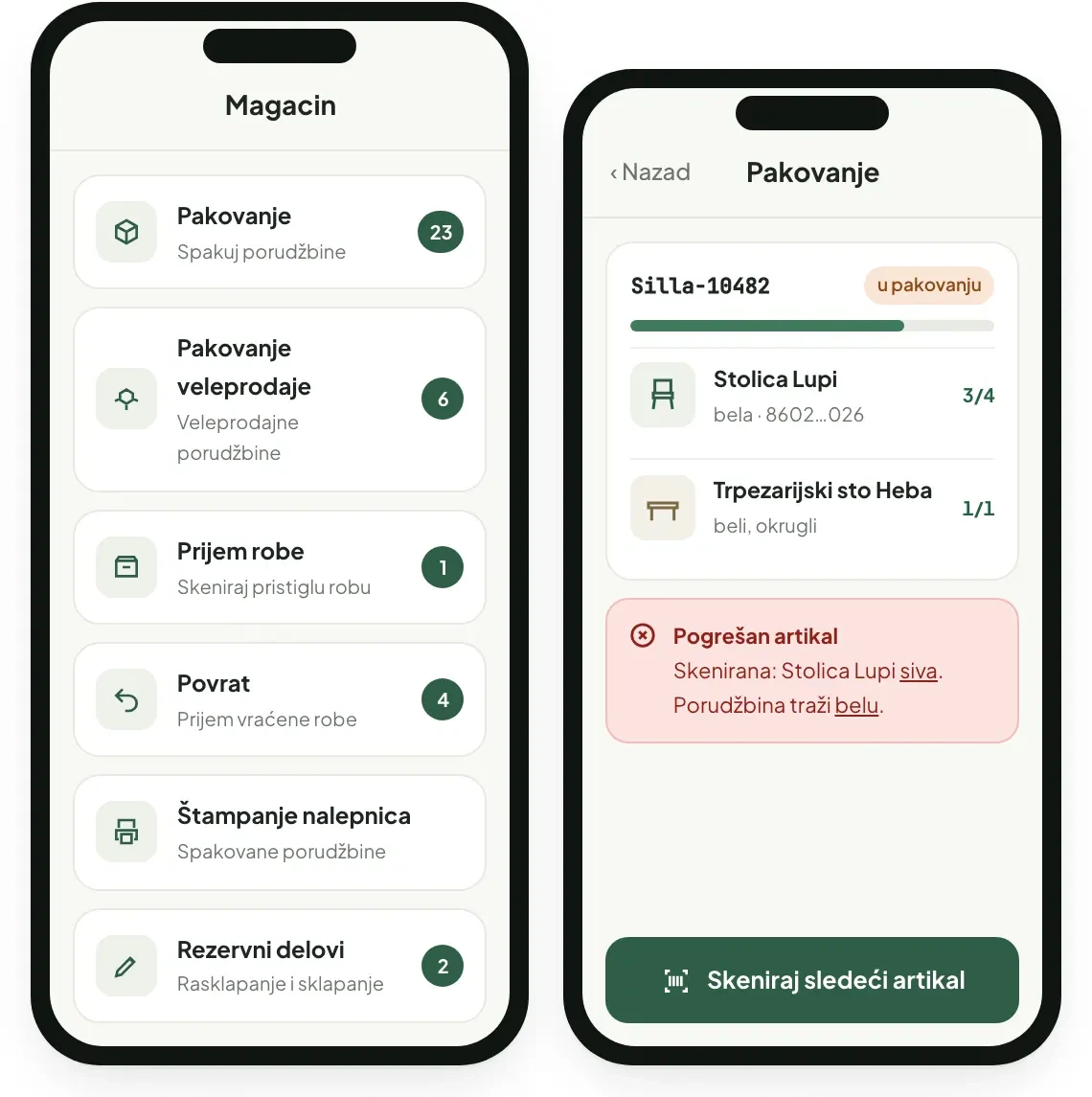
Silla warehouse task list and barcode packing screen mock-up
The warehouse screen on a phone: a task list and packing with required barcode scanning.

DELIVERY · COURIER

No shipment gets forgotten

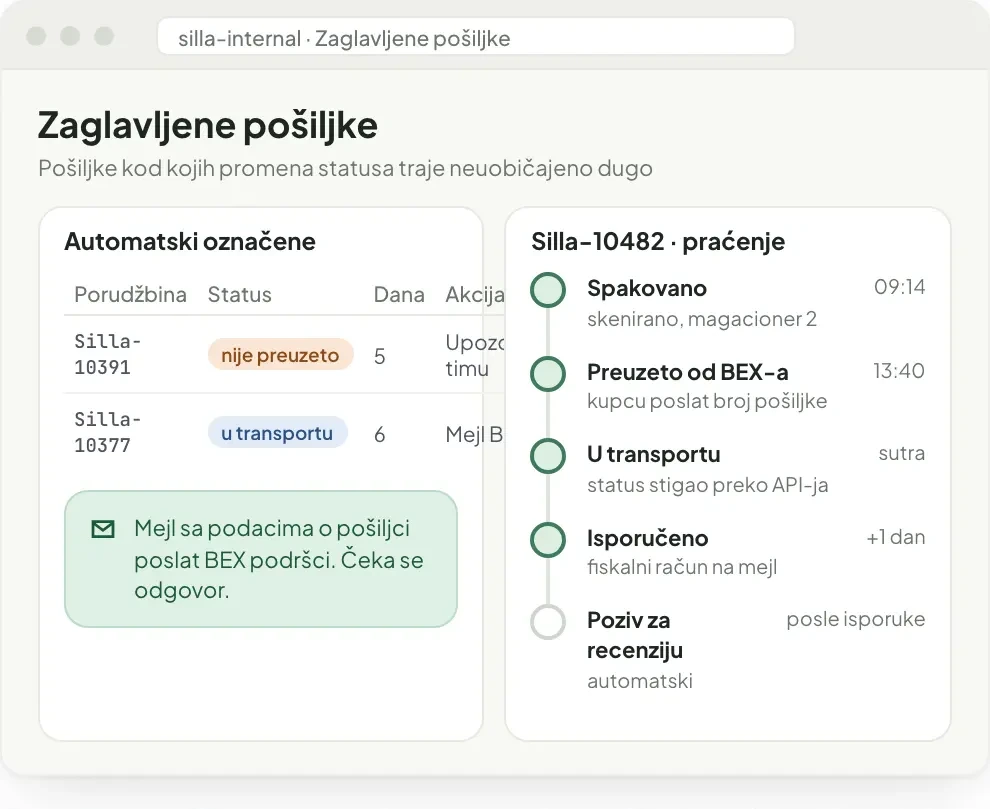
The app connects to the courier's API and tracks each shipment from collection to delivery. When something gets stuck, the system spots it before the customer does.

Waiting for the courier for more than 4 days? The employee responsible gets an automatic alert.

Collected but still not delivered after 4 days? The app automatically emails the courier to ask for a check.

After delivery, the customer receives a receipt and an invitation to leave a review. That's where the 1,000+ reviews come from.

Addresses stay accurate through a nightly sync with the courier's address database: 176 municipalities, 4,718 towns and villages, and 97,510 streets.

Silla shipment tracking and shipment history screen mock-up
Stuck shipments are flagged automatically, with each shipment's full history in one place.

COMPLAINTS · SPARE PARTS · OUTLET

Complaints in a minute. Returned goods back on sale.

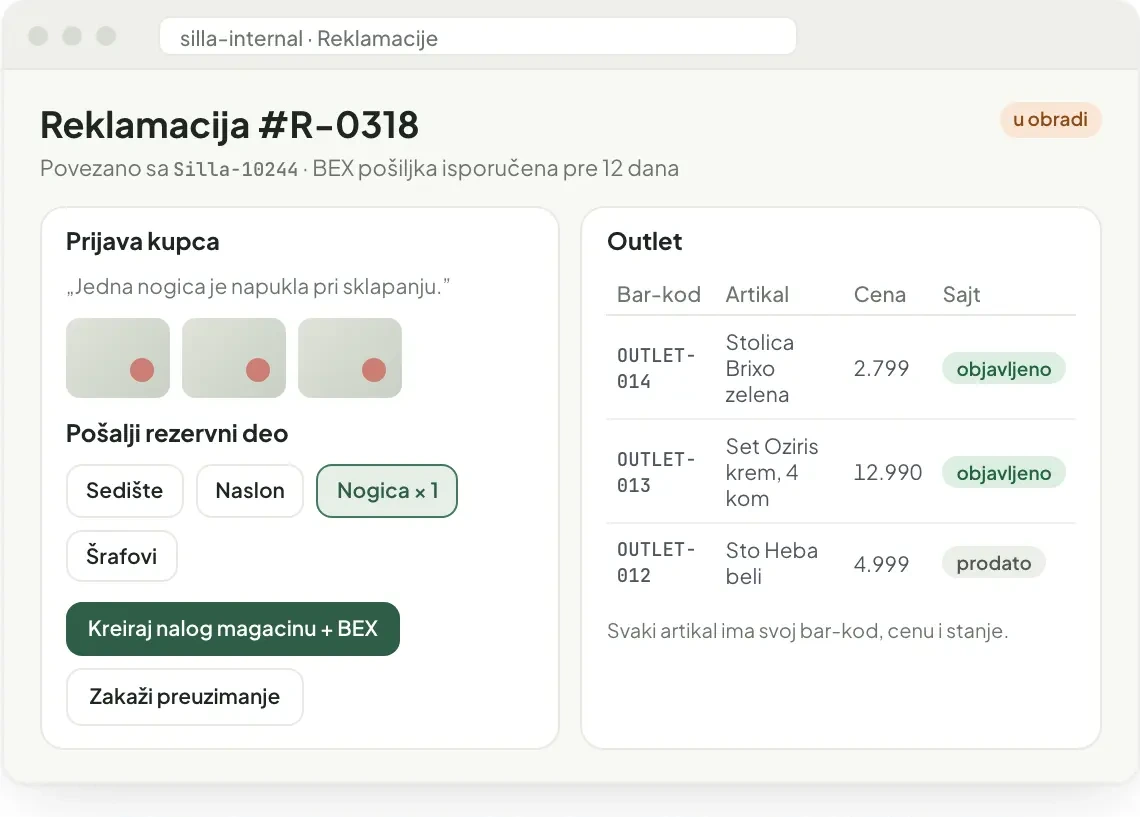
Each product has a list of components in the app: a chair is a seat, a backrest and four legs. A complaint can be resolved by sending the right part instead of a whole chair.

The complaint is linked straight to the order, the courier shipment and the customer's photos.

An employee chooses the part. The warehouse gets a task and a new courier shipment is created without entering the address again.

Returned goods with minor damage become outlet items, with their own barcode and price, and appear on the website automatically.

The outlet stock sells out. Silla doesn't write goods off.

Silla complaint, spare parts and outlet screen mock-up
A complaint, spare part selection and outlet items that appear on the website automatically.

PURCHASING · STOCK

What's coming, what's on the shelf and what's waiting for a part

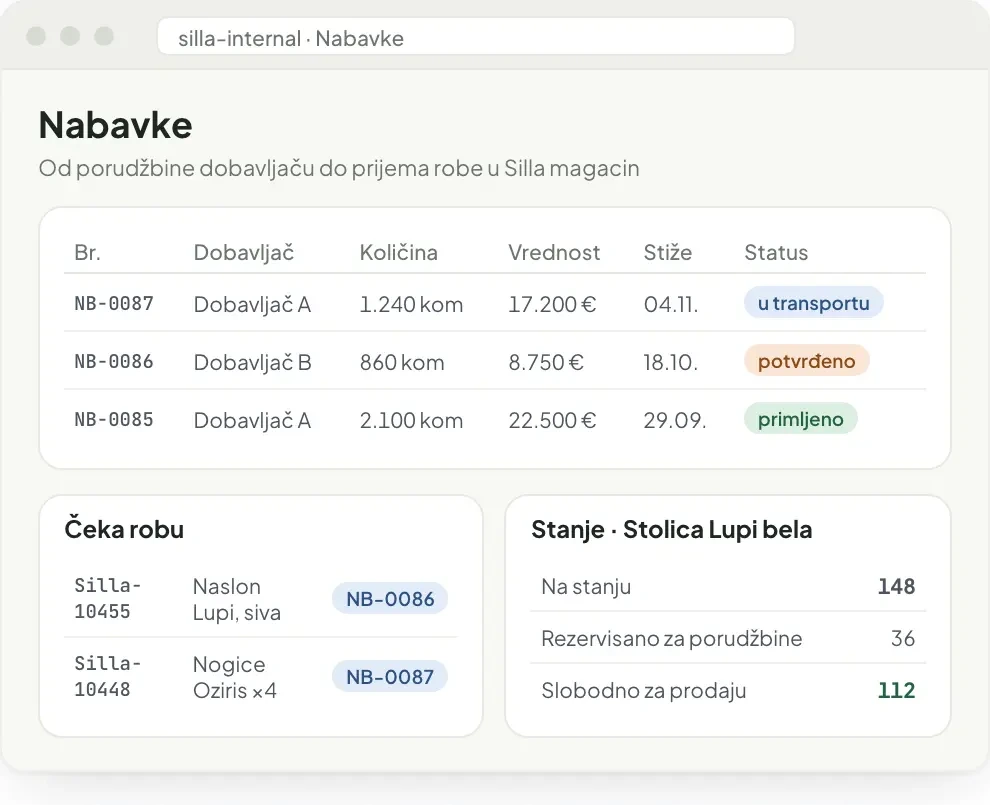
Every purchase is tracked from the supplier order to receipt in the warehouse. Stock is recorded by component, so the app knows which orders can ship today.

Each purchase shows the supplier, items, quantities, purchase prices and expected arrival.

Stock only increases when a warehouse worker scans the goods in. The record matches what's actually there.

Orders missing a part sit on a separate 'waiting for stock' list and move forward as soon as it arrives.

The team publishes colors, photos, dimensions and prices for new products on the website from the app.

Silla purchasing, waiting orders and stock screen mock-up
Purchasing, orders waiting for a part and actual stock with reservations.

REPORTS · CONTROL

The owner doesn't ask what's happening. He sees it.

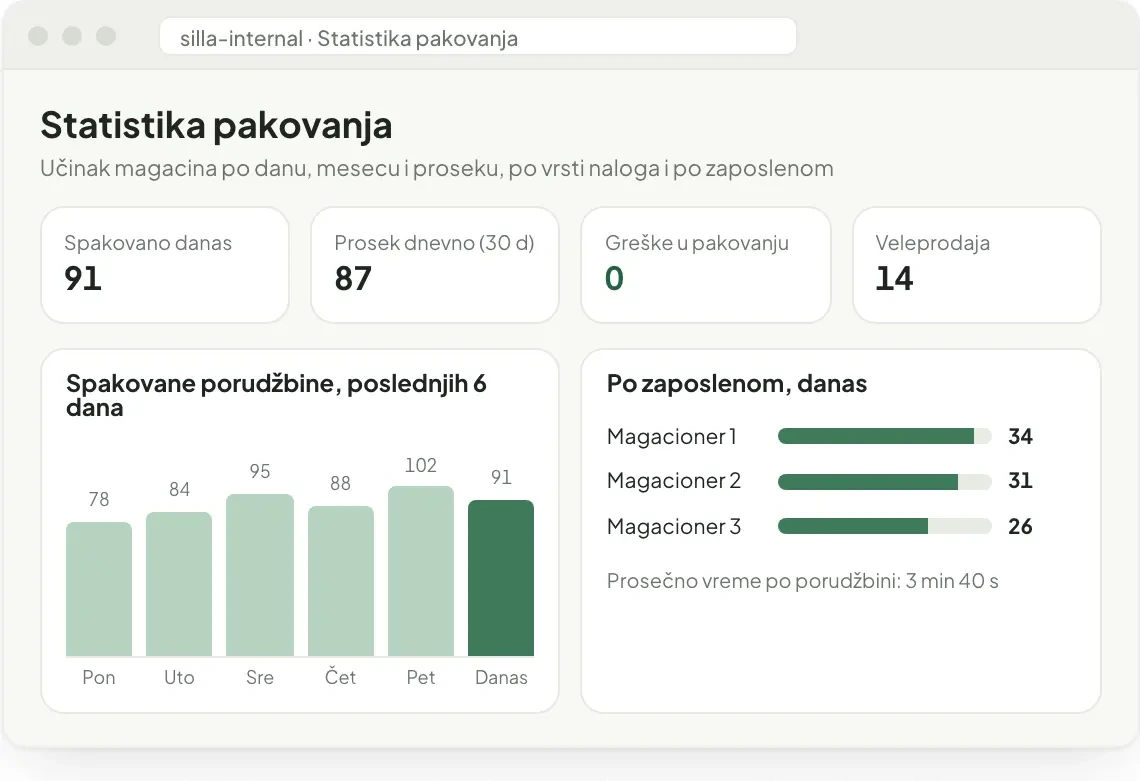
Orders, revenue, margins, deliveries and returns, and warehouse output by day and employee. It's all in the app in real time, without manual spreadsheets.

Packing statistics are available by day, month and employee.

Finances and receipts sit in the same system as orders.

Important actions wait in an approval queue. The system log keeps a record of what happened.

Wholesale and business-to-business sales appear in the same reports as online sales.

Silla warehouse output report screen mock-up
Warehouse output by day and employee, without a single manual spreadsheet.

THE BIGGEST CHANGE

A company that runs wherever its owner is

Before the app, every piece of information lived in someone's head, on paper or in Excel. To know what was happening, the owner had to be there. Today Veljko works from Thailand, visits trade fairs around the world and finds new products while the company grows faster than ever.

RESULTS

What changed, in numbers

These are the figures Silla measures in its daily work. Rounded values are marked as approximate. Labor savings are calculated at a total cost of about 100,000 Serbian dinars a month per worker.

Silla before and after the app
AreaBefore the appTodayDifference
Orders a dayAbout 20About 90, same team4.5x
Errors3–8 a week: addresses, wrong chairs, stock recordsPractically zero; the system blocks them~0
Google reviewsFewer than 100More than 1,00010x
Labor costsWork that would need 3–4 extra workersAutomated, with no new hiresAbout €31,000 to €41,000 a year
Stock write-offsDamaged goods with no clear next stepOutlet stock sells out0 write-offs
Answering a customer's status queryUp to 15 minutes of searchingImmediately, on one screenImmediate
The owner's roleHas to be at the companyRuns the company from abroad1 click

What that means in money: the work the app does today would need 3–4 extra workers. Automating it saves about €31,000 to €41,000 a year. The app paid for itself in the first month of operation.

HOW I BUILT IT

From the first conversation to full operation in about a month

  1. Week 1

    Map the process

    I mapped every step from order to complaint with the people doing the work each day.

  2. Week 2

    Connect the systems

    I connected WooCommerce, the courier's API, barcodes and product component lists.

  3. Week 3

    Warehouse and delivery

    I built the warehouse screen, scanning, shipment tracking and automatic emails.

  4. Week 4

    Full operation

    Complaints, outlet, purchasing and reports went into use. The team stopped using paper and Excel.

The screens on this page are faithful mock-ups of the Silla app. Customer names and order, shipment and purchase numbers are invented to protect data.

Still running your business on paper and spreadsheets?

Tell me what's getting in the way. I can help you work out what needs to change and build the software when that's the fix.